No products added!
January 6, 2026
No Comments

Written by
Empirebeauty STL
Clip In Hair Extensions 101: Everything You Need to Know
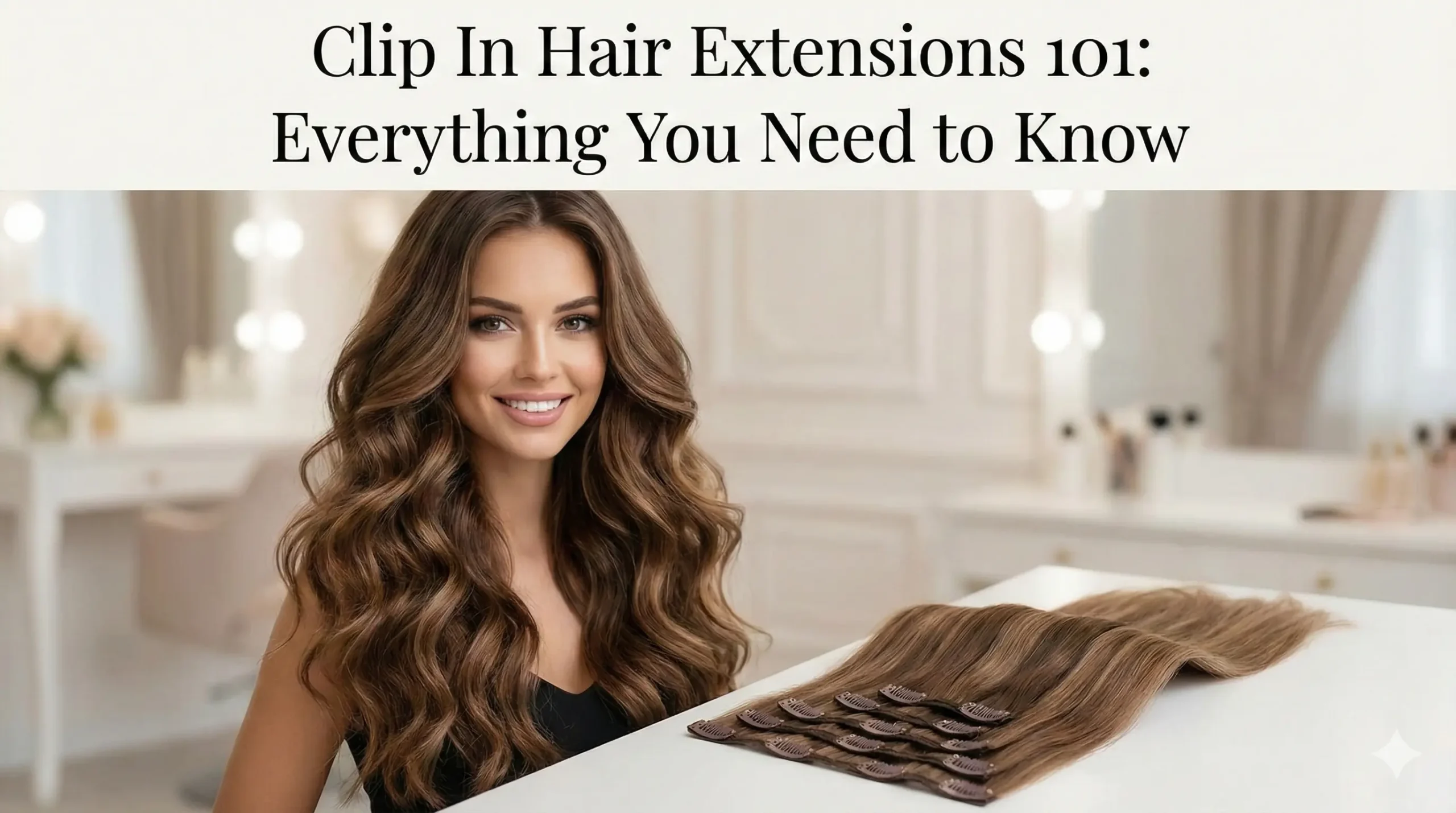
Clip in hair extensions are one of the easiest ways to add length, volume, or color to your hair without any permanent commitment. Unlike sew‑ins or tape‑ins that require salon visits and weeks of wear, clip‑ins go in and out in minutes, which makes them perfect for people who want flexibility. Whether you are getting ready for a special event, want fuller hair for everyday confidence, or just love experimenting with different looks, understanding how clip‑ins work will help you get the most natural, flattering results.
This guide covers everything beginners need to know: what clip in hair extensions are, how to choose the right type and length, how to put them in and blend them seamlessly, and how to care for them so they last as long as possible.
What Are Clip In Hair Extensions?
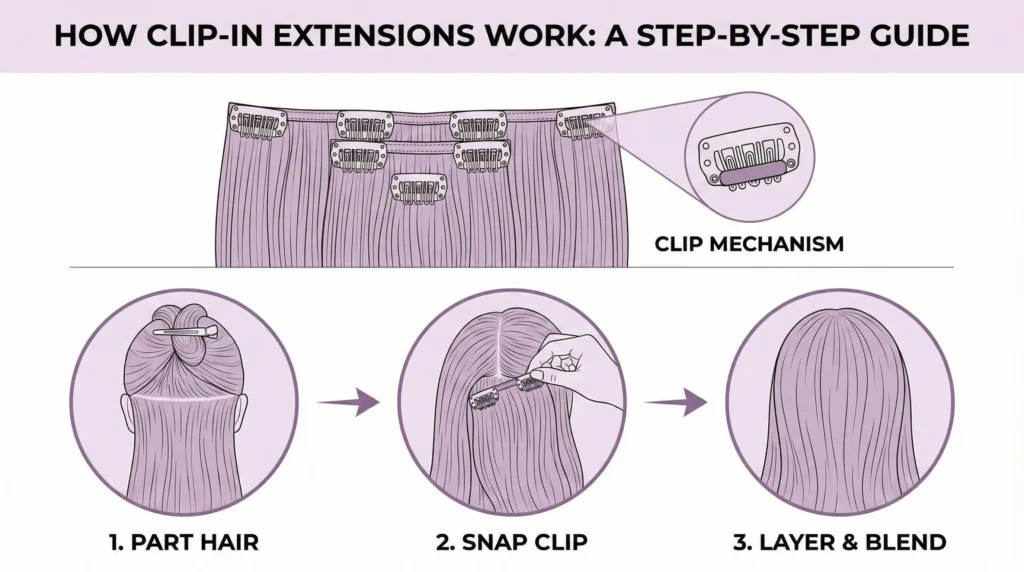
Clip in hair extensions are wefts of hair attached to small clips that open and close to secure the hair to your own strands. Each set usually includes multiple pieces in different widths: wider wefts for the back and sides of your head, and narrower pieces for the top, temples, and around the face. The clips grip onto a small section of your natural hair near the roots, and when positioned correctly, the extensions blend in and move with your own hair.
The biggest advantage of clip‑ins is reversibility. You can wear them for a few hours, a full day, or just for photos, then remove them before bed. That means your natural hair gets regular breaks from added weight and tension, and you avoid some of the maintenance challenges that come with permanent extensions. It also means you can change your look as often as you like without committing to one length or style for months.
Human Hair vs. Synthetic: What to Choose
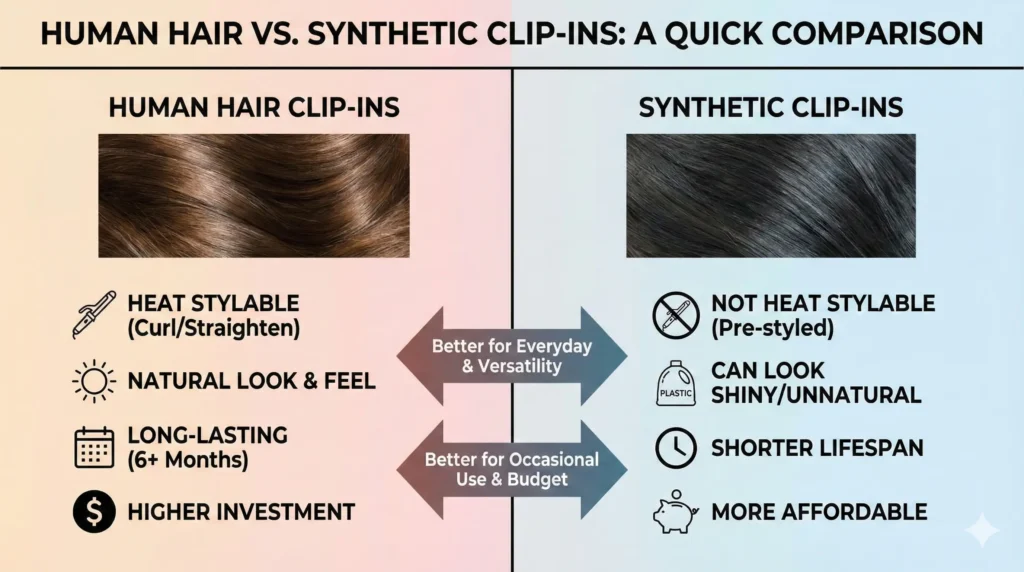
Clip in hair extensions come in two main materials: human hair and synthetic fiber. Human hair clip‑ins are made from real hair, which means they can be heat‑styled, colored, and treated much like your own strands. They tend to look more natural under different lighting, move more realistically, and last longer with proper care. If you plan to wear your extensions regularly or want the freedom to curl, straighten, or adjust the color, human hair is usually the better investment.
Synthetic clip‑ins are more affordable and come pre‑styled, so the curls or waves hold their shape without much effort. However, they usually cannot handle heat styling, and over time the fibers can become shiny or frizzy in a way that looks less natural. For occasional wear or costume purposes, synthetic can work fine, but for everyday confidence and versatility, most people prefer human hair.
Choosing the Right Length and Weight
Length is one of the first things to consider. Clip‑in extensions are measured in inches, usually from the top of the weft to the tips of the hair. If your natural hair is shoulder length and you want it to reach mid‑back, you will generally need extensions that are several inches longer than your current length to account for blending and layering. Keep in mind that very long extensions can feel heavy if your natural hair is fine or thin, so it helps to balance drama with comfort.
Weight refers to how much hair is in the set, typically measured in grams. A lighter set with fewer wefts works well for adding subtle volume or a few inches of length, while heavier sets with more wefts create dramatic fullness. Most manufacturers offer sets ranging from around 100 grams to 200+ grams. If you have thick hair, you may need a heavier set to make the extensions blend naturally. If your hair is on the finer side, a mid‑weight set usually provides enough volume without overwhelming your natural texture.
Matching Color and Texture
Getting the color right is essential for a seamless look. Most brands offer swatches or color charts, and it is worth taking the time to compare them against your hair in natural light. If you are between shades, going slightly lighter is often easier to adjust than going too dark, since you can add lowlights or blend with temporary color if needed. Ombré and highlighted extensions can also be forgiving because they naturally have multiple tones that help them blend with varied natural hair colors.
Texture should match or complement your natural hair. If your hair is straight, straight or body‑wave extensions will blend most easily. If you have wavy or curly hair, choosing extensions with a similar wave or curl pattern will make blending simpler and reduce the need for heavy styling. That said, human hair extensions can be curled or straightened to match your look for the day, so slight texture differences are usually manageable with a curling iron or flat iron.
How to Apply Clip In Hair Extensions Step by Step
Applying clip‑ins gets easier with practice, but the basic process is straightforward. Start with clean, dry, and detangled hair. If your hair is very slippery or freshly washed, adding a bit of texture spray or dry shampoo at the roots can help the clips grip better.
Begin at the nape of your neck. Section off a horizontal line of hair from ear to ear, about an inch above the hairline, and clip the rest of your hair up and out of the way. Open the clips on your widest weft, position the extension along the parted section, and snap the clips closed, starting from the center and working outward to ensure the weft sits flat and secure.
Move up your head in layers, creating new horizontal sections every inch or so and clipping in additional wefts. Use wider wefts toward the back and sides where you want the most volume, and save the smaller pieces for the top, crown, and around your face. As you work upward, make sure each weft is hidden under the section of natural hair above it.
Once all the wefts are in, gently brush through your hair to blend the extensions with your natural strands. You can also use a curling iron or straightener to create a uniform texture throughout, which helps everything move together. Finally, check your hairline and part in a mirror to make sure no clips or weft edges are visible.
Blending Techniques for a Natural Look
Even well‑matched extensions can look obvious if they are not blended properly. One simple trick is to tease your natural hair slightly at the roots where you will clip in the extensions. This creates a small cushion that helps the weft sit more securely and also adds a bit of volume that makes the transition less obvious.
Another blending method is strategic layering. If your natural hair is shorter than the extensions, you can trim or have a stylist lightly layer the extensions so they do not all end at the same blunt line. Face‑framing layers are especially helpful because they draw attention to your features rather than the point where your hair and the extensions meet.
Styling the hair together after the extensions are in is one of the most effective ways to create a seamless look. Running a flat iron or curling wand through both your natural hair and the extensions at the same time helps them blend in texture and movement. Finishing with a light hairspray or smoothing serum can also tame flyaways and give the whole look a polished, cohesive finish.
Daily Wear and Removal
Clip in hair extensions are designed to be worn during the day and removed before bed. Sleeping in them can cause tangling, put stress on your natural hair, and wear out the clips faster. Removing them takes just a few minutes: unclip each weft, starting from the bottom and working your way up, and gently set each piece aside.
After removal, it is a good habit to lightly brush through the extensions to remove any tangles, then store them properly. Hanging them on a hanger or laying them flat in a storage case helps them keep their shape and prevents the hair from getting matted or the clips from bending. Keeping them away from dust, humidity, and direct sunlight will also extend their lifespan.
Caring for Your Clip In Extensions
Human hair clip‑ins should be washed regularly, but not as often as your natural hair since they are not exposed to scalp oils. Washing every 15–20 wears, or whenever they feel heavy with product buildup, is usually enough. Use a sulfate‑free shampoo and a moisturizing conditioner, gently working the products through the hair without twisting or rubbing harshly. Rinse thoroughly and let them air‑dry on a towel or stand.
When heat styling, always use a heat protectant spray and keep the temperature moderate. High heat can gradually damage the hair, especially at the ends, so using the lowest effective setting will help the extensions last longer. Avoid using heavy oils or serums directly on the wefts near the clips, as this can make them slip or attract dirt.
Store your extensions properly between wears. A dedicated storage box, hanger, or even a large ziplock bag can work as long as the hair is clean, dry, and detangled before it goes in. Keeping them organized and protected from tangling will save you time and frustration every time you go to wear them.
How Long Do Clip In Hair Extensions Last?
With good care, high‑quality human hair clip‑ins can last anywhere from six months to over a year, and sometimes longer. The lifespan depends on how often you wear them, how much heat styling you do, and how well you maintain them. Extensions that are washed gently, stored carefully, and not over‑processed tend to stay soft, shiny, and tangle‑free much longer than those that are neglected or heavily styled.
If you notice the hair becoming dry, tangled, or frizzy, a deep conditioning treatment can often bring it back to life. For shedding or loose wefts, a professional can sometimes re‑secure the tracks, extending the life of the set. Investing in a quality set from the start and treating it well usually pays off in longevity and consistent results.
Making Clip Ins Work for Your Lifestyle
Clip in hair extensions are one of the most versatile tools in anyone’s hair routine. They work for special occasions when you want extra glamour, for everyday wear when you want consistent volume, and for experimenting with lengths and colors without permanent changes. Because they go in and out so easily, they fit into busy schedules, travel plans, and moments when you just want your hair to look effortless.
Learning to apply them quickly and blend them well takes a bit of practice, but once you have the process down, getting ready becomes faster and more fun. Instead of spending an hour trying to add volume with hot tools or worrying about a bad hair day, you can clip in extensions, brush everything together, and walk out the door feeling confident. For beginners and experienced users alike, clip‑ins offer a simple, flexible way to take control of how your hair looks and feels every single day.