No products added!
January 20, 2026
No Comments

Written by
Empirebeauty STL
HD Lace vs Regular Lace: The Complete Comparison Guide
Choosing between HD lace and regular lace can feel overwhelming when you are shopping for closures or frontals. Both options promise natural-looking results, but they differ in material thickness, blending ability, durability, price, and maintenance requirements. Understanding these differences helps you make a confident decision based on your priorities, whether that is invisible blending, long-term durability, or budget-friendly performance.
This guide breaks down everything you need to know about HD lace versus regular lace: what each type is made of, how they compare in appearance and longevity, which skin tones they work best for, and how to care for each one so it lasts as long as possible.
What is HD Lace?
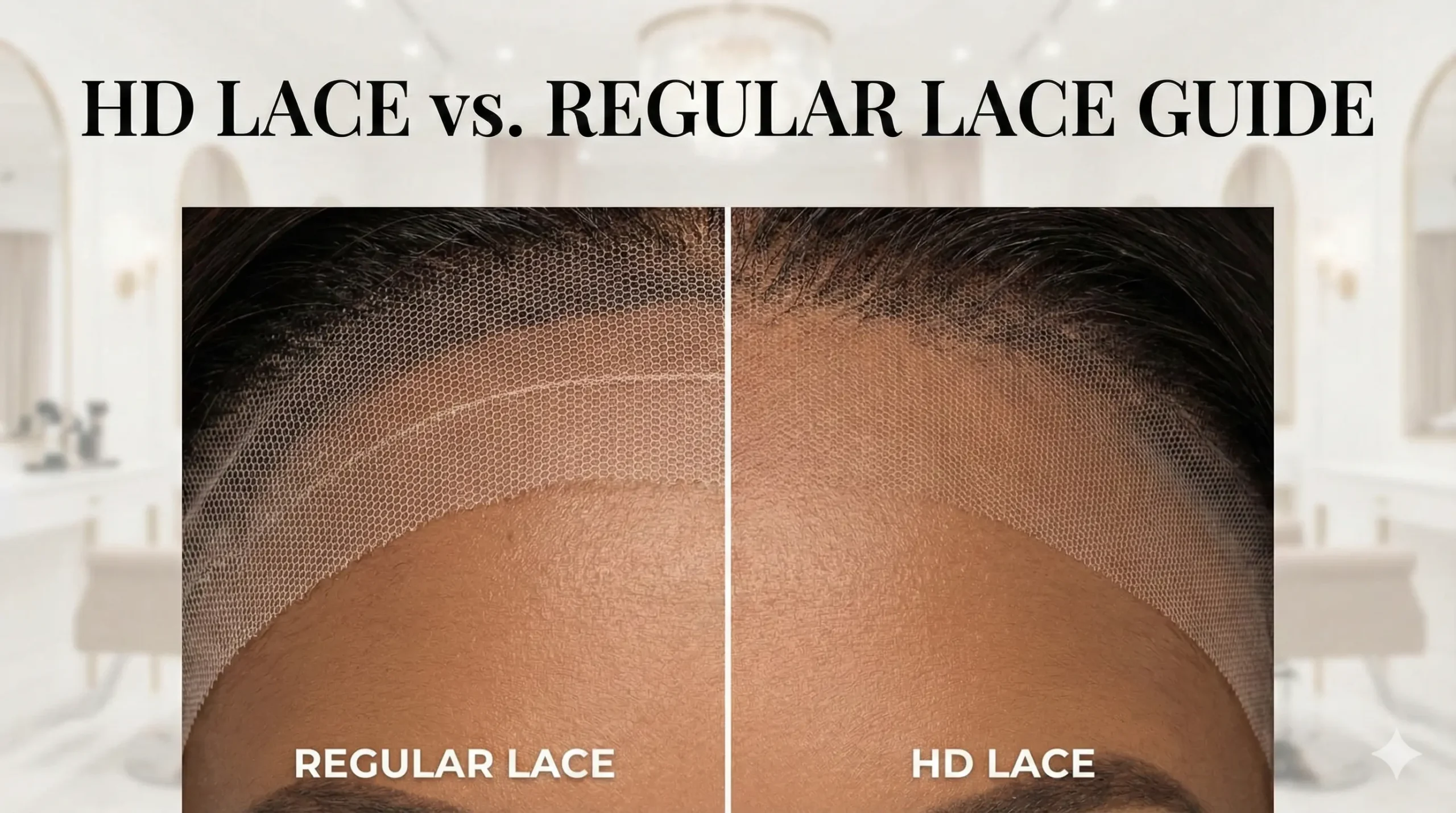
HD lace, also called high-definition lace, is an ultra-thin and transparent lace material designed to disappear completely against the skin. The mesh is made with a very low denier, which refers to the thickness of the individual threads, resulting in a delicate, almost invisible finish that mimics the appearance of a natural scalp. Because HD lace is so fine, it reflects light similarly to real skin, making it nearly undetectable even in bright lighting or up-close photos.
HD lace works universally across all skin tones because of its neutral transparency. Whether you have fair, medium, or deep skin, the lace blends seamlessly without needing heavy tinting or customization. This makes it a popular choice for anyone seeking a flawless, professional-looking hairline with minimal effort. The main tradeoff is that HD lace is more delicate than other lace types, so it requires gentle handling and careful maintenance to avoid tearing or fraying.
What is Regular Lace?
Regular lace refers to traditional lace materials used in closures and frontals, most commonly Swiss lace and French lace. Swiss lace is soft, lightweight, and relatively delicate, offering a natural look that works well for everyday wear. French lace is thicker and more durable, designed to withstand heavier styling, tension, and longer wear times. Both types have a slightly visible mesh texture compared to HD lace, but they are still effective at creating realistic partings and hairlines when applied and blended correctly.
Regular lace typically comes in multiple shades, such as light brown, medium brown, and dark brown, which are meant to match a range of skin tones. While this gives you more options for color matching, it also means you may need to tint or apply foundation to the lace to achieve a perfect blend. Regular lace is generally more affordable than HD lace and offers better durability, making it a practical choice for people who want a balance between appearance, longevity, and cost.
Blending and Appearance: Which Looks More Natural?
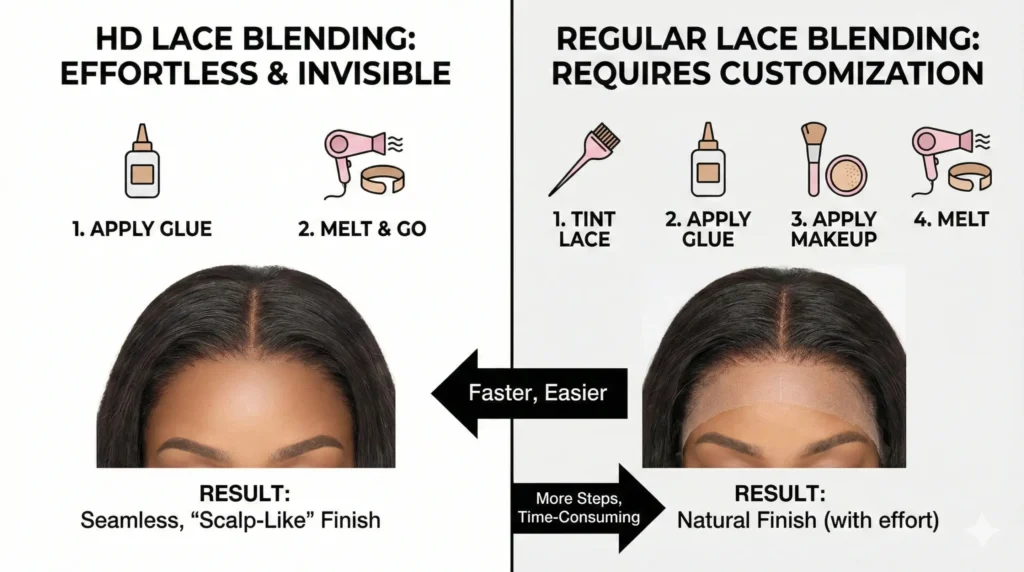
HD lace delivers superior blending and a more natural appearance because of its ultra-thin, transparent material. The lace melts into the skin almost effortlessly, creating the illusion that hair is growing directly from the scalp. This makes HD lace ideal for anyone who wants an undetectable hairline without spending extra time on customization. The transparency works across all skin tones, so there is no need to worry about finding the perfect lace shade or applying heavy makeup to hide the mesh.
Regular lace, while still natural-looking, requires more effort to blend seamlessly. The slightly thicker material can sometimes leave a faint line along the hairline, especially under bright lights or in high-definition photos. To achieve a flawless finish with regular lace, you may need to tint the lace with fabric dye, apply powder foundation to match your skin tone, or use concealer along the hairline. These extra steps are manageable, but they do add time to the installation process. For most everyday situations, regular lace blends well enough to look natural, but HD lace has the edge when it comes to achieving a truly invisible hairline.
Durability and Longevity: Which Lasts Longer?
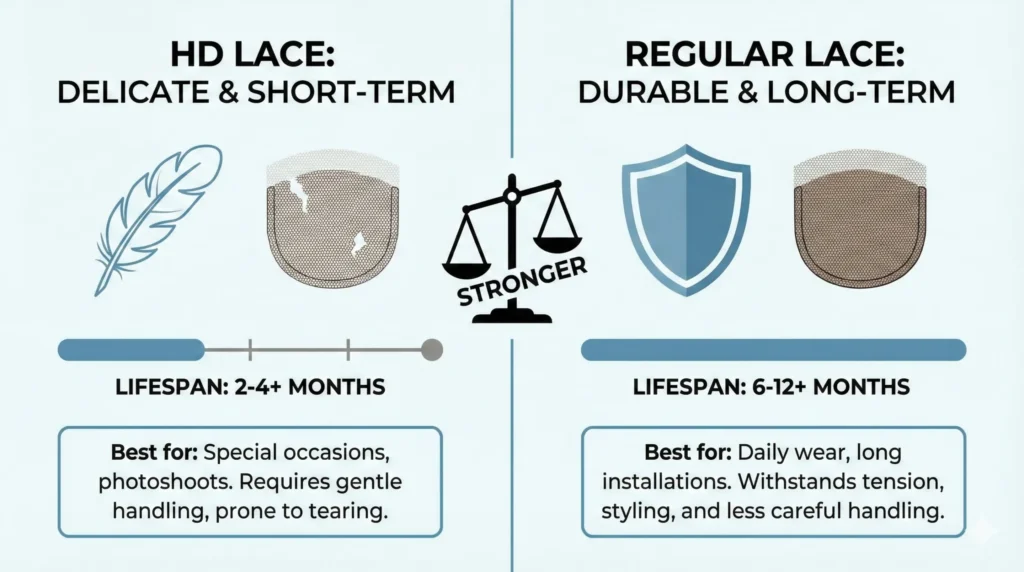
Regular lace is more durable than HD lace because of its thicker material and stronger mesh construction. Swiss and French lace can handle daily wear, frequent styling, and tension from braiding, ponytails, or updos without tearing or showing signs of wear. This makes regular lace a better choice for long-term installations, especially if you plan to keep your closure or frontal installed for several weeks or months at a time. With proper care, regular lace closures and frontals can last anywhere from six months to over a year, depending on how often they are worn and maintained.
HD lace, on the other hand, is more delicate and requires gentle handling to prevent damage. The ultra-thin mesh can tear more easily if pulled, snagged, or exposed to harsh products. While HD lace can still last several months with careful use, it typically has a shorter lifespan than regular lace, especially if worn daily or styled frequently. If you prioritize durability and longevity over the most invisible blend, regular lace is the safer choice. But if you are willing to handle your closure or frontal with extra care in exchange for the most natural appearance, HD lace is worth the investment.
Comfort and Breathability
HD lace is lighter and more breathable than regular lace, making it exceptionally comfortable for all-day wear. The ultra-thin material allows air to circulate freely against the scalp, reducing heat buildup and sweating, which is especially beneficial in warm climates or during physical activity. Because the lace is so lightweight, it feels almost weightless on the head, eliminating the sensation of wearing something heavy or restrictive. This makes HD lace a favorite for people with sensitive scalps or anyone who dislikes the feeling of traditional wigs or closures.
Regular lace is also comfortable, though slightly less breathable than HD lace due to its thicker construction. Swiss lace is softer and more flexible, while French lace is sturdier and may feel slightly firmer against the skin. Most people find regular lace comfortable enough for daily wear, but those who prioritize maximum breathability and lightweight feel may prefer HD lace. The difference is subtle but noticeable, especially during extended wear or in hot weather.
Price Comparison: Is HD Lace Worth the Extra Cost?
HD lace closures and frontals are generally more expensive than regular lace options because of the specialized manufacturing process and higher-quality materials. The ultra-thin mesh requires advanced technology to produce, which increases production costs and retail prices. Depending on the brand and hair quality, HD lace closures and frontals can cost 20 to 50 percent more than their regular lace counterparts. For many people, the investment is worthwhile because of the flawless blending and professional appearance HD lace provides.
Regular lace is more budget-friendly and widely available, making it accessible for anyone looking for a natural-looking closure or frontal without spending extra. Swiss and French lace options offer solid performance at a lower price point, and with proper blending techniques, they can still deliver impressive results. If you are new to closures and frontals or want to experiment with different styles without a big financial commitment, regular lace is a smart starting point. Once you are comfortable with installation and maintenance, you can decide whether upgrading to HD lace makes sense for your needs and budget.
Regular lace is also comfortable, though slightly less breathable than HD lace due to its thicker construction. Swiss lace is softer and more flexible, while French lace is sturdier and may feel slightly firmer against the skin. Most people find regular lace comfortable enough for daily wear, but those who prioritize maximum breathability and lightweight feel may prefer HD lace. The difference is subtle but noticeable, especially during extended wear or in hot weather.
Which Lace Type Works Best for Your Skin Tone?
HD lace is the most versatile option for all skin tones because of its transparent, neutral base. The ultra-thin material adapts to any complexion, from very fair to very deep, without requiring tinting or color matching. This universal compatibility makes HD lace especially convenient for people with darker skin tones, who often struggle to find regular lace shades that blend seamlessly without heavy customization. The transparency eliminates the guesswork and ensures a natural-looking hairline regardless of your skin color.
Regular lace is available in multiple shades, which can work well if you find a match close to your skin tone. Light brown, medium brown, and dark brown options give you some flexibility, but you may still need to tint the lace or apply makeup to achieve a perfect blend. Lighter skin tones tend to have an easier time matching regular lace, while deeper skin tones may need to customize the lace color for the best results. Transparent lace, a type of regular lace, offers better blending across a wider range of skin tones than traditional Swiss or French lace, though it is still not as universally adaptable as HD lace.
Installation and Melting: Which is Easier to Work With?
HD lace is easier to melt and blend because of its thin, flexible material. The lace conforms to the skin with minimal effort, and a simple application of adhesive or got2b glue, followed by heat from a blow dryer and a melt band or silk scarf, helps the lace disappear completely. Many people find that HD lace requires fewer layers of glue and less time spent pressing and melting, which makes the installation process faster and more beginner-friendly. The transparency also means you do not need to spend extra time tinting the lace or applying foundation, further simplifying the process.
Regular lace requires more attention during installation to achieve a seamless blend. Because the material is slightly thicker, you may need to apply multiple layers of adhesive, use more heat to melt the lace, and carefully tint or color-match the lace to your skin tone. This can add 10 to 20 minutes to your installation routine, especially if you are new to working with closures and frontals. However, once you develop your technique, regular lace can still produce natural-looking results with a bit of extra effort. For those who prioritize speed and ease of installation, HD lace has a clear advantage.
Maintenance and Care: How to Make Each Lace Type Last
HD lace requires gentle care to preserve its delicate structure. Avoid pulling, tugging, or rubbing the lace harshly when removing adhesive or styling the hair. Use oil-based adhesive removers to dissolve glue gently, and always support the lace with your fingers while cleaning to prevent tearing. When washing the closure or frontal, handle the lace carefully and avoid scrubbing or twisting the material. Store HD lace pieces flat or on a wig stand to prevent the lace from wrinkling or snagging. With proper care, HD lace can last several months, though it may need replacing sooner than regular lace if worn frequently.
Regular lace is more forgiving and easier to maintain because of its thicker, sturdier construction. You can clean it more vigorously, remove adhesive with less concern about tearing, and handle it more confidently during styling. Regular lace closures and frontals can withstand repeated installations and removals without showing significant wear, making them ideal for anyone who changes their look often or prefers low-maintenance options. Washing with sulfate-free shampoo, conditioning gently, and air-drying on a flat surface will keep regular lace in good condition for many months.
HD Lace vs Transparent Lace: What's the Difference?
Transparent lace is a type of regular lace that sits between traditional Swiss or French lace and HD lace in terms of thinness and blending ability. It is thinner than standard regular lace but slightly thicker than HD lace, offering a balance between natural appearance and durability. Transparent lace works well across light to medium skin tones and provides better blending than traditional brown-tinted lace, though it is not as universally invisible as HD lace.
HD lace is thinner, softer, and more transparent than transparent lace, making it the most undetectable option available. The key difference lies in the denier of the mesh: HD lace uses a lower denier, resulting in finer threads and a more skin-like finish. While transparent lace can still deliver a natural look with some customization, HD lace melts effortlessly into any skin tone without additional tinting or makeup. If you want the absolute best blending and have the budget for it, HD lace is the superior choice. If you want a middle-ground option that offers better durability than HD lace while still looking natural, transparent lace is a solid compromise.
Best Use Cases for HD Lace
HD lace is ideal for special occasions, photo shoots, videos, and any situation where you want your hairline to look flawless up close. The ultra-thin material creates a scalp-like appearance that holds up under bright lights, high-definition cameras, and close inspection, making it the go-to choice for content creators, performers, and anyone who wants their hair to look professionally done. HD lace also works well for everyday wear if you prioritize appearance over durability and do not mind handling your closure or frontal with extra care.
If you have a deeper skin tone and struggle to find regular lace that blends seamlessly, HD lace eliminates that challenge entirely. The universal transparency means you never have to worry about mismatched lace colors or spending time tinting and customizing. For anyone who values convenience, speed, and the most natural-looking hairline possible, HD lace is worth the investment.
Best Use Cases for Regular Lace
Regular lace is the better choice for long-term installations, daily wear, and anyone who wants a durable, low-maintenance option. If you plan to keep your closure or frontal installed for several weeks or months, regular lace will hold up better under tension, adhesive, and repeated styling. It is also more forgiving for beginners who are still learning how to install and remove closures and frontals without damaging the lace.
Budget-conscious shoppers will appreciate regular lace for its affordability and availability. You can find high-quality Swiss or French lace closures and frontals at accessible price points, and with proper blending techniques, the results are still natural and flattering. Regular lace also works well if you prefer to customize your lace color or do not mind spending a few extra minutes during installation to achieve the look you want.
Making the Right Choice for Your Needs
Choosing between HD lace and regular lace comes down to your priorities, budget, and how you plan to use your closure or frontal. If you want the most invisible, professional-looking hairline and are willing to invest in a more delicate material that requires gentle care, HD lace is the clear winner. It blends effortlessly, works across all skin tones, and delivers a flawless appearance that holds up under any lighting or camera.
If you prioritize durability, affordability, and ease of maintenance, regular lace is a reliable and practical choice. It offers natural-looking results with a bit of extra blending effort and can withstand daily wear and long-term installations without showing significant wear. For many people, regular lace provides the best balance of performance and value, especially for everyday styles and extended wear.
Both options have their strengths, and understanding the differences helps you choose the lace type that fits your lifestyle, budget, and beauty goals. Whether you go with HD lace for its unbeatable transparency or regular lace for its durability and versatility, you will have the knowledge to install, blend, and care for your closure or frontal with confidence.