No products added!
December 24, 2025
No Comments

Written by
Empirebeauty STL
The Ultimate Guide to Human Hair Wigs for Beginners
Trying a wig for the first time can feel exciting and overwhelming at the same time. There are new terms to learn, different cap types, textures, densities, and price ranges to navigate. Human hair wigs add another layer: they look and move like real hair, but they also ask for a bit more care and budget. This guide breaks everything down in simple language so you can choose your first human hair wig with confidence instead of guesswork.

What Makes a Human Hair Wig Different?
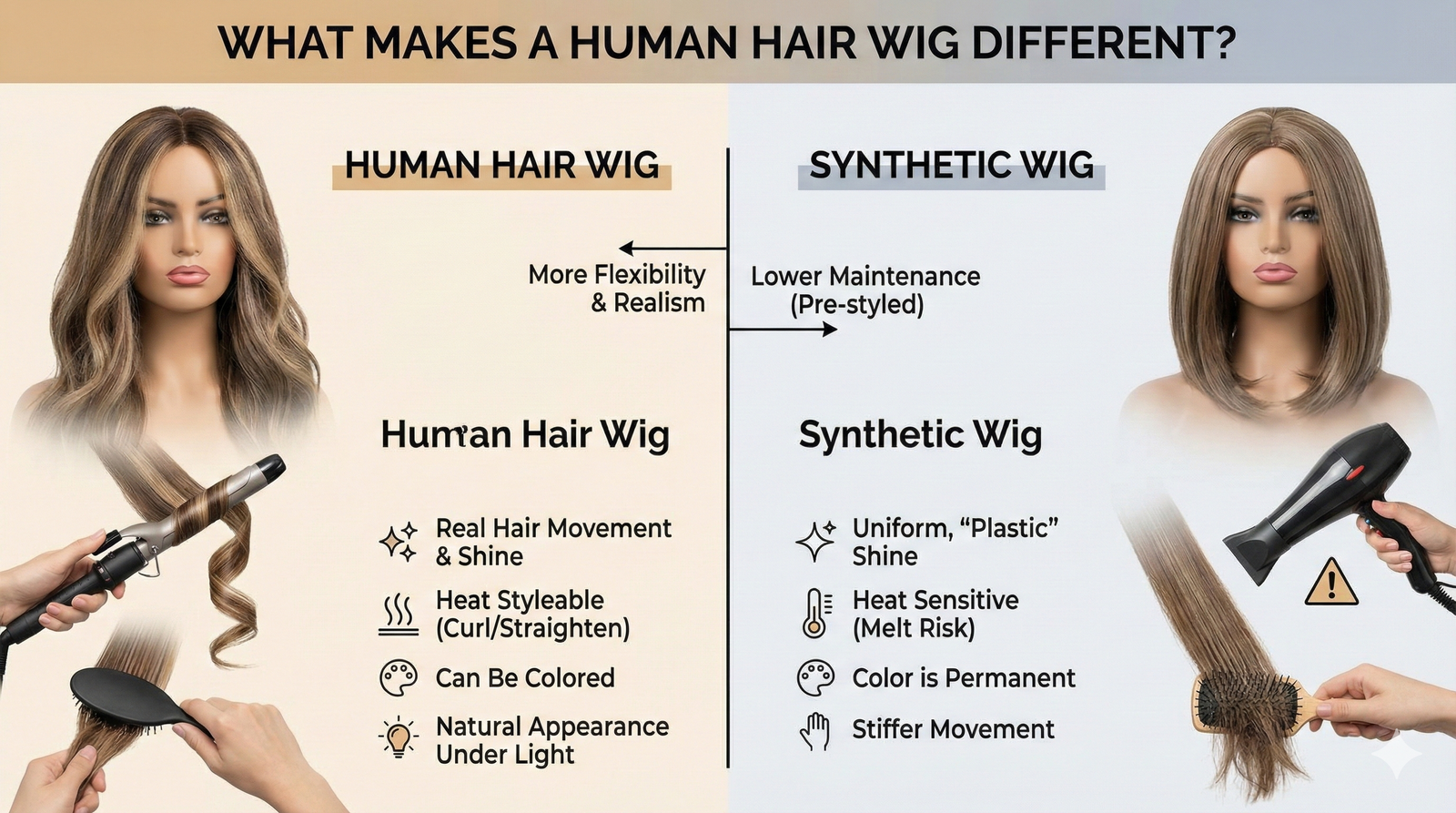
A human hair wig is made from real human hair, which means it behaves much more like your own strands than synthetic fibers. You can straighten it, curl it, blow‑dry it, and, in many cases, color it, as long as you treat it gently and use heat protectant. That flexibility is one of the biggest reasons beginners eventually gravitate to human hair: you are not locked into a single style forever.
Because the hair is real, these wigs also tend to look more natural in different kinds of light. Under sunlight, indoor lighting, or camera flash, human hair doesn’t have the overly shiny, plastic finish that some synthetic units do. It moves and falls in a way people instinctively recognize as “real hair,” which can be a huge confidence boost if you’re worried about your wig being obvious.
The trade‑off is that human hair wigs usually cost more upfront and require a little more effort to wash, condition, and style. Think of them like premium clothing: you get better fabric and a better fit, but you also treat them more carefully so they last.
Key Wig Cap Types Beginners Should Know
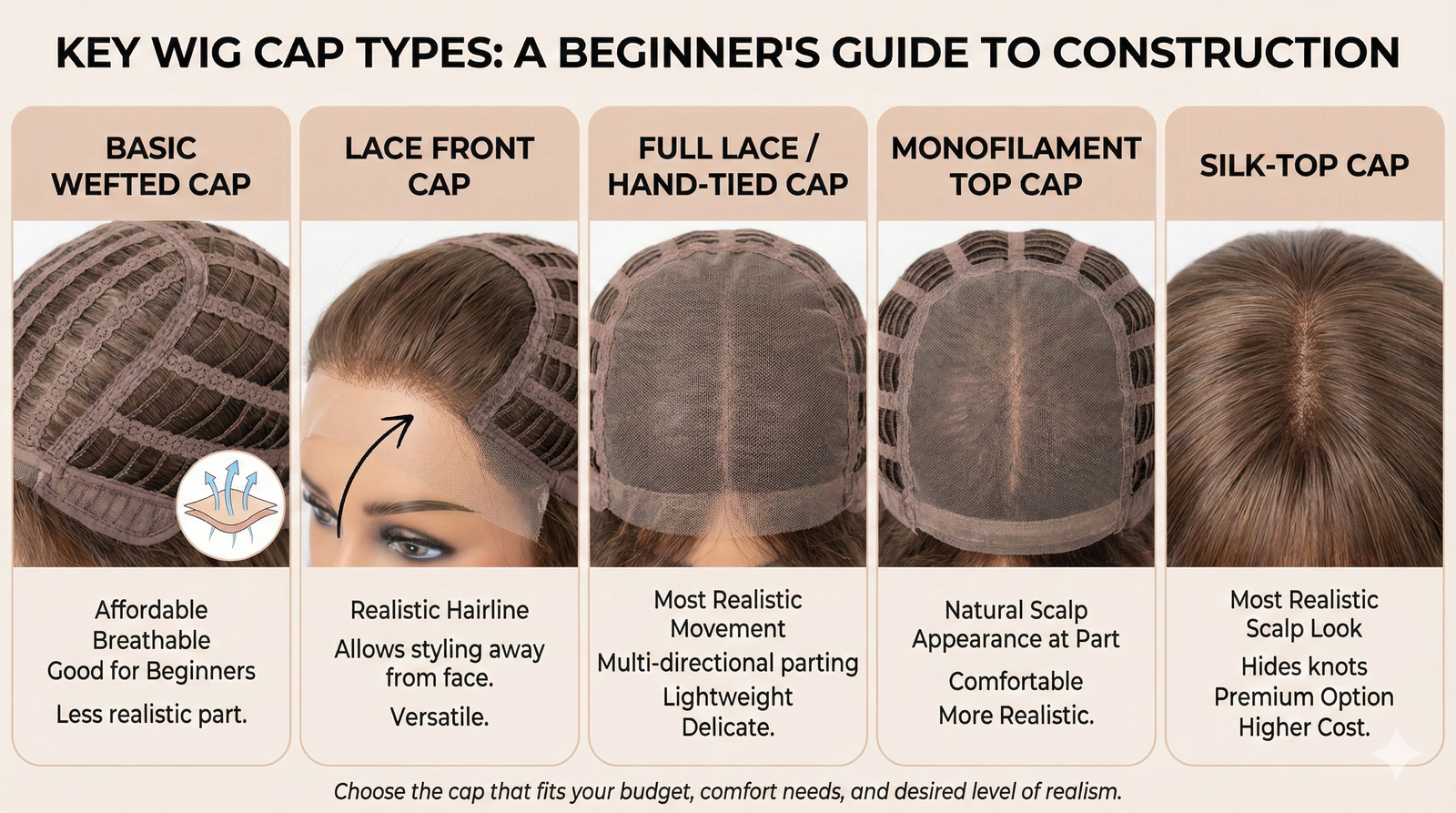
Before you fall in love with a texture or color, it helps to understand what’s happening underneath—the cap. The cap is the base that the hair is attached to, and it affects how natural the wig looks, how comfortable it feels, and how easy it is to wear.
A basic wefted cap is made from rows of hair sewn onto strips of material. This type is generally more affordable and offers good airflow, which helps if you run warm. It may not look quite as “scalp‑like” at the part as more advanced constructions, but for beginners on a budget it can still be a solid choice.
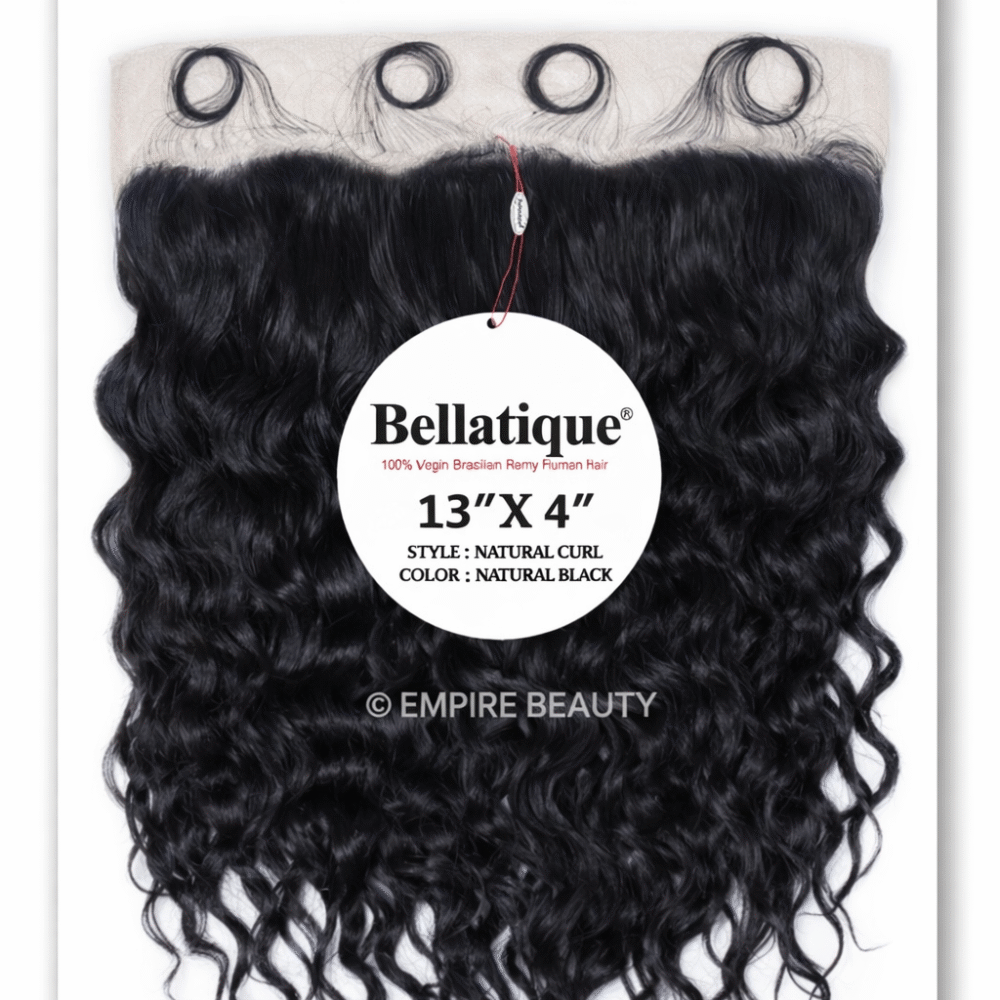
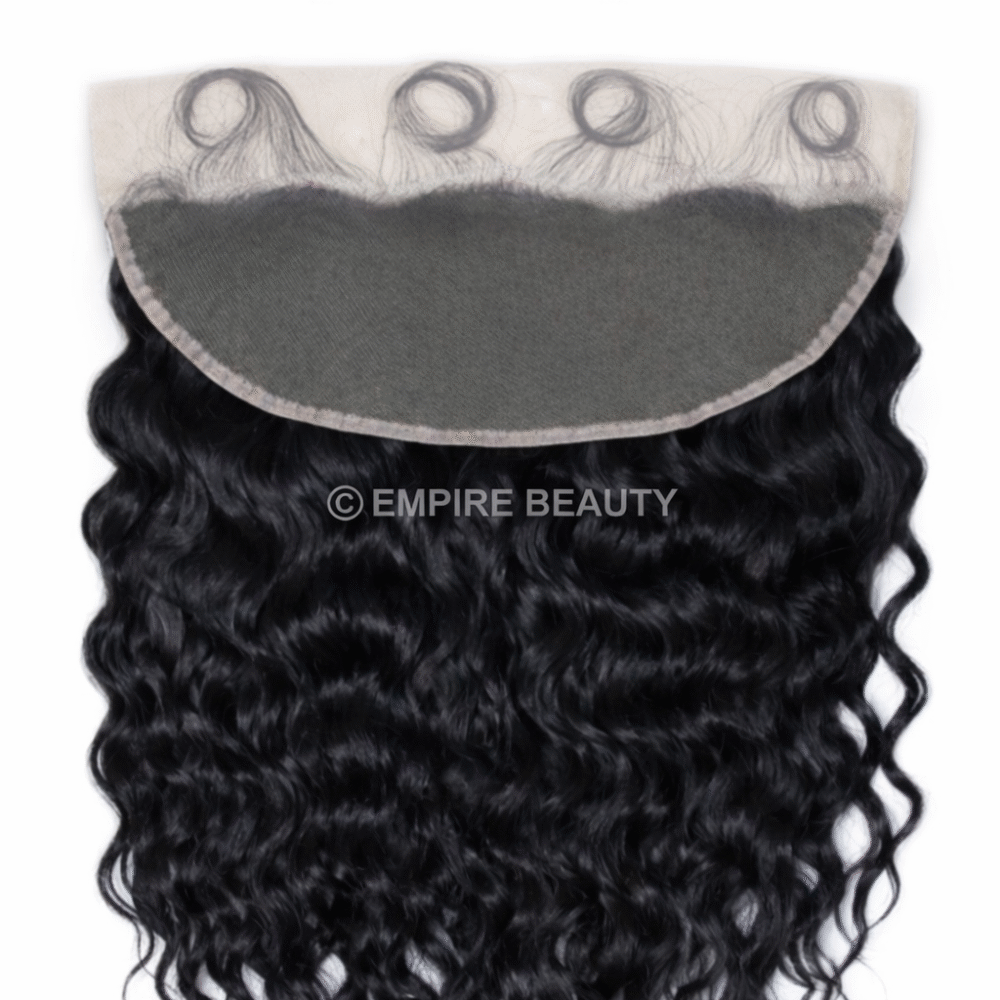
Lace front caps have a strip of lace across the front hairline with individual hairs tied into it. When the lace is cut and blended properly, it can mimic a very realistic hairline, especially if some hairs are plucked out to reduce density at the front. Lace fronts are popular with beginners because they allow you to wear the hair away from your face without an obvious line.
Full lace and hand‑tied caps take realism and comfort further. With these, most or all of the cap is made from lace or mesh, and each hair is individually tied. That allows you to part the wig in multiple directions and gives very natural movement. These caps are lightweight and comfortable for long wear but are usually more expensive and delicate.
Monofilament and silk‑top caps are designed to look like a real scalp where the hair is parted. A mono top uses a fine mesh with individual hairs tied in so it looks like they are growing from your head. Silk tops add an extra layer that hides knots and makes the part look especially realistic. These constructions cost more but are an excellent option if you’re sensitive about your scalp showing or you want the most natural part possible.
Glueless vs. Glue‑On: What’s Best for a Beginner?
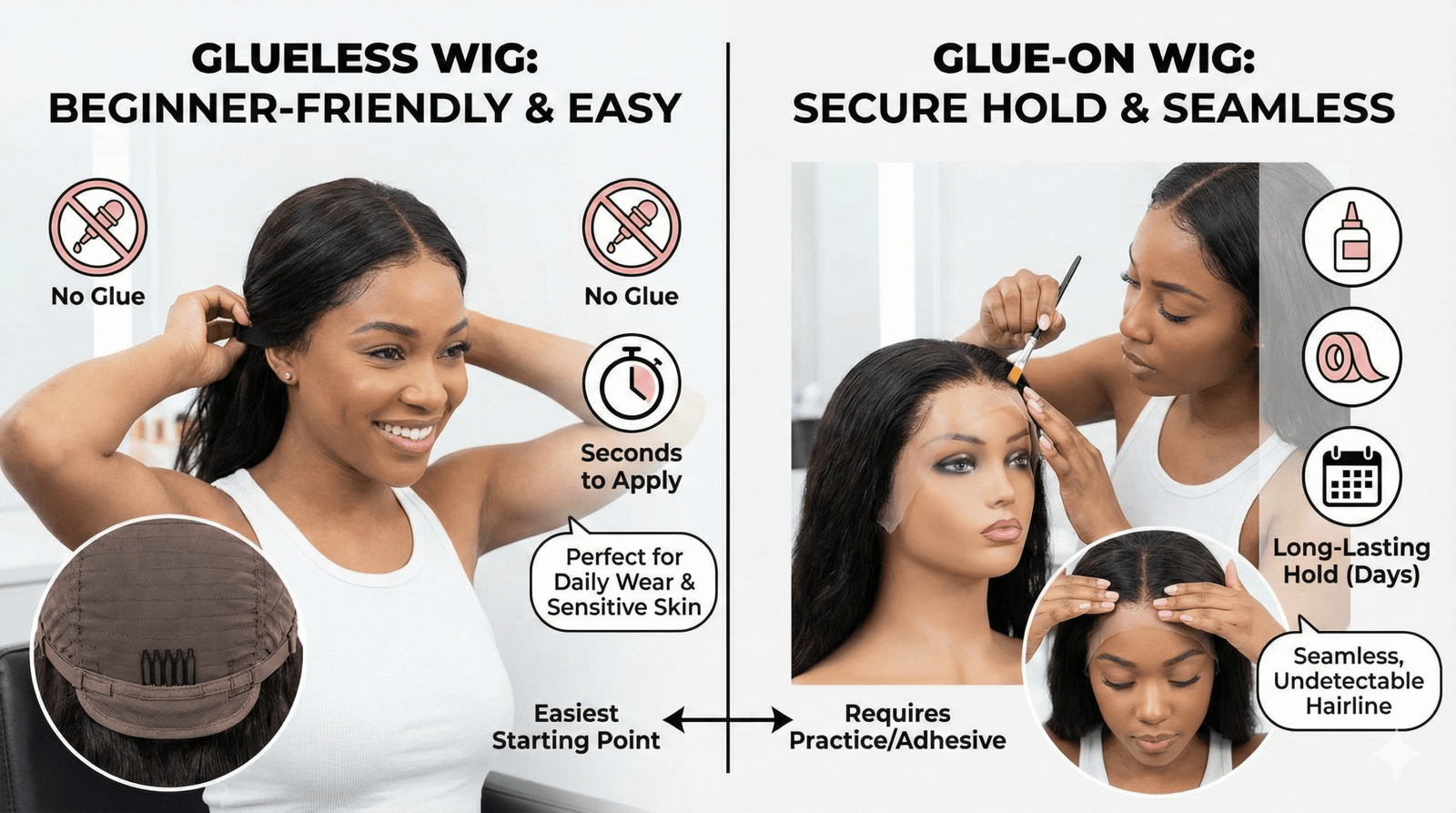
One of the biggest fears beginners have is messing up lace or adhesive. That’s why glueless human hair wigs have exploded in popularity. These units rely on adjustable straps, bands, and combs to stay on your head, so you can put them on and take them off without using glue or tape. For everyday wear, travel, and people with sensitive skin, this is often the easiest starting point.
Glue‑on lace wigs use adhesive or tape around the front or entire perimeter to secure the unit. This can give a very seamless look, especially along the hairline, and is often used for long events, photo shoots, or people who want their wig to stay put for several days at a time. However, proper application and removal matter a lot; if you’re new, it’s wise to practice or get help from a stylist so you don’t irritate your skin or damage your edges.
If you’re just starting your wig journey, a well‑made glueless lace wig is usually the most forgiving option. You can experiment with positioning and styling without the pressure of working with adhesives right away.
Choosing Length, Texture, and Density
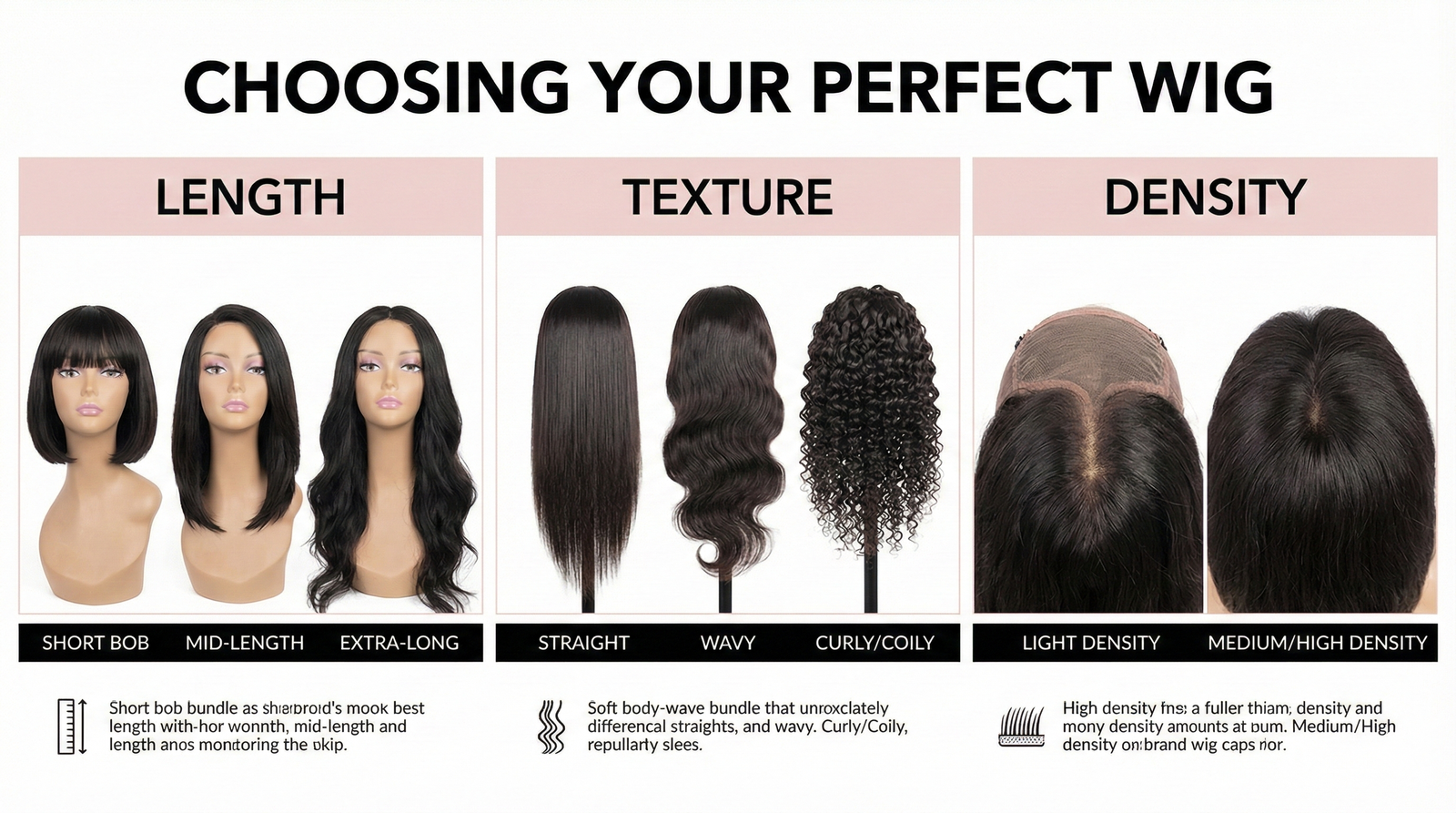
Once you understand cap types, the fun part begins: deciding how you want the hair itself to look and feel. Length affects both the overall vibe and the practicality of the wig. Short bobs up to the shoulders are easier to manage, tangle less, and often feel lighter on the head. Mid‑length cuts around the collarbone or chest give more styling options without the full maintenance of very long hair. Extra‑long units can look dramatic and glamorous but may require more time to detangle and style, especially at the nape.
Texture is just as important. If you want the wig to blend with leave‑out or feel like a natural extension of your usual style, choose a texture similar to your own hair—straight, wavy, curly, coily, or kinky‑curly. Straight and body‑wave textures are generally easier for beginners because they are simpler to brush and style. Curly and coily textures can look stunning and very natural, but they demand more moisture, gentle detangling, and the right products to avoid frizz.
Density refers to how much hair is on the wig. Light densities can feel very natural but may show the cap more easily if over‑brushed or styled. Very heavy densities look full and glamorous but can feel warm and take longer to wash and dry. Many beginners find medium to medium‑high densities the best compromise between realism and fullness.
Finding the Right Size and Fit
A beautiful wig that doesn’t fit well will never feel right. Measuring your head before you buy is a key step beginners sometimes skip. Using a soft measuring tape, you’ll want to note your head circumference, front‑to‑nape length, ear‑to‑ear measurements, and sometimes temple‑to‑temple. Most brands offer size charts that map these numbers to small, medium, and large caps.
If you’re between sizes, adjustable straps and elastic bands can often fine‑tune the fit, but it’s still wise to stay as close to your true measurements as possible. A cap that’s too small can cause headaches and pull on your hairline, while one that’s too large may shift around and feel insecure. When a wig fits correctly, it should feel snug but not tight, and you should be able to move your head comfortably without feeling like it might slip.
Basic Care and Maintenance for Human Hair Wigs
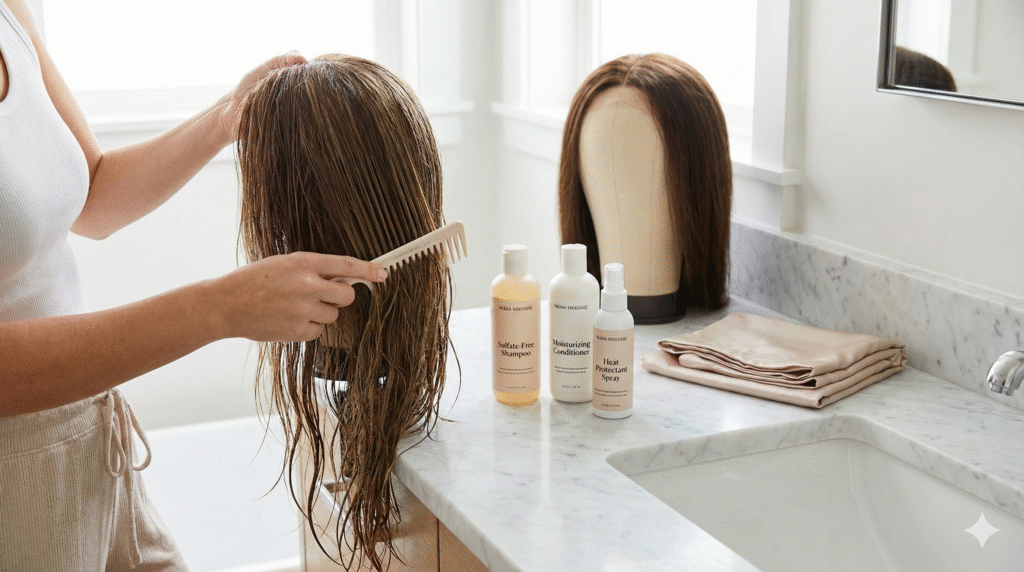
Owning a human hair wig is a bit like owning a high‑quality garment: the better you care for it, the longer it looks new. Washing frequency depends on how often you wear it and how many products you use, but many people find that washing every 7–10 wears is enough for daily use. Use a sulfate‑free shampoo and a moisturizing conditioner, and avoid rough scrubbing. Instead, gently smooth the product through the hair in a downward motion.
Detangling should always start from the ends and work upward, using a wide‑tooth comb or your fingers. It’s best to detangle when the hair is damp and conditioned, not bone dry or dripping wet. For heat styling, always use a heat protectant spray and keep the temperature at a moderate level; there’s usually no need to go as hot as you might on very coarse natural hair.
When you’re not wearing the wig, placing it on a stand or mannequin head helps it keep its shape and prevents tangling. If you’re traveling or short on space, storing it in a satin or silk bag is another good option. Try to avoid leaving it crumpled in drawers or on furniture where it can pick up dust or get snagged.
Everyday Confidence with Your First Wig
For many beginners, the biggest hurdle isn’t the technical side of wigs but the emotional one: getting used to seeing yourself in different hair and worrying about whether other people will notice. The truth is, most people are far more focused on the overall impression—your smile, outfit, and presence—than on analyzing your hairline. A well‑chosen human hair wig that fits your lifestyle can quietly remove a lot of stress from your routine, giving you back time and energy that used to go into “bad hair days.”
Starting with realistic expectations, taking a little time to learn the basics, and choosing a style that feels like an enhanced version of you rather than a total departure will make the transition smoother. As you grow more comfortable, you can experiment with new lengths, colors, and textures. What begins as a practical solution often becomes a creative tool and a source of confidence, turning your first human hair wig into the beginning of a much more flexible, expressive relationship with your hair.