No products added!
January 20, 2026
No Comments

Written by
Empirebeauty STL
Virgin Hair vs Remy Hair: What's the Difference and Which is Better?
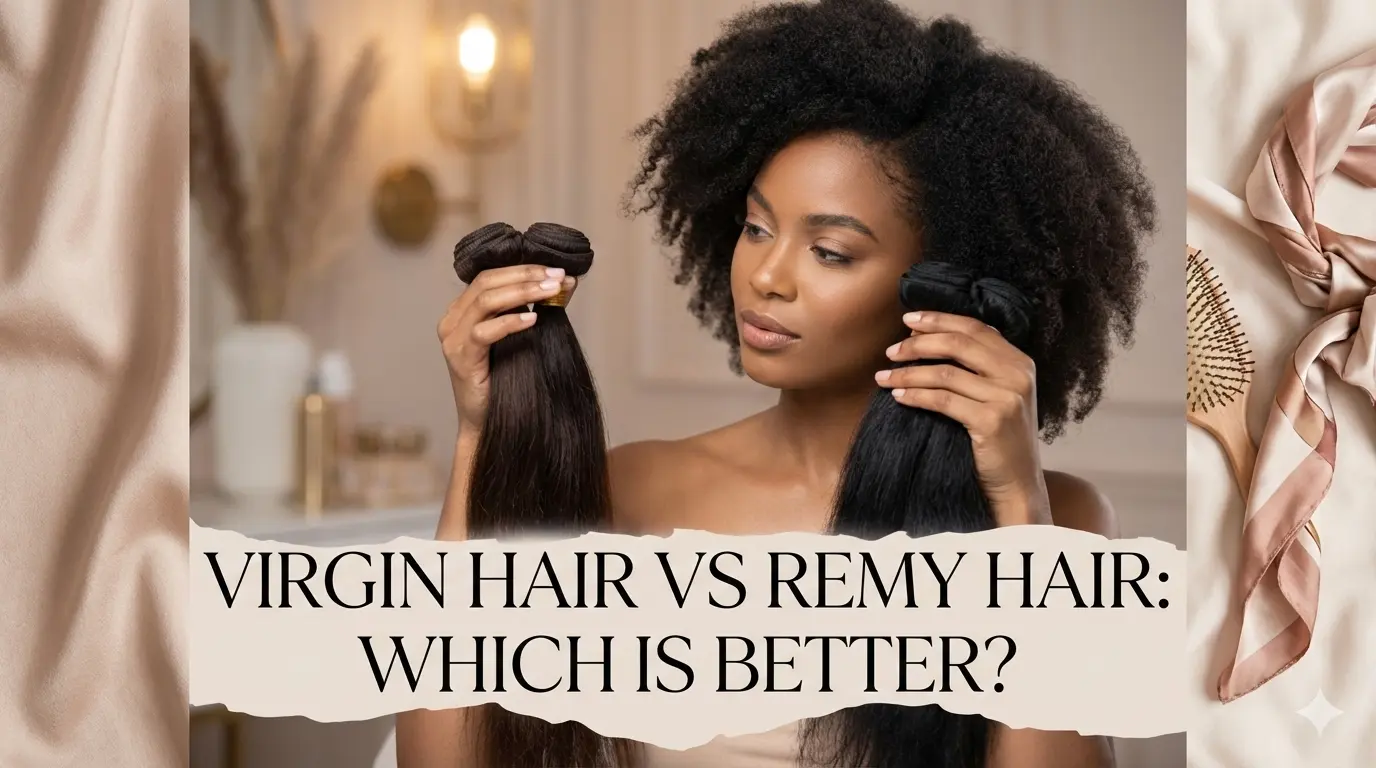
Choosing between virgin hair and remy hair can feel confusing when you are shopping for bundles, closures, or frontals. Both options promise high quality and natural results, but they differ significantly in processing methods, cuticle integrity, styling versatility, durability, and price. Understanding these differences helps you make an informed decision based on your styling goals, maintenance preferences, and budget.
This guide explains everything you need to know about virgin hair versus remy hair: what each type is, how they are processed and collected, how long they last, which offers more styling freedom, and how to choose the right option for your needs.
What is Virgin Hair?
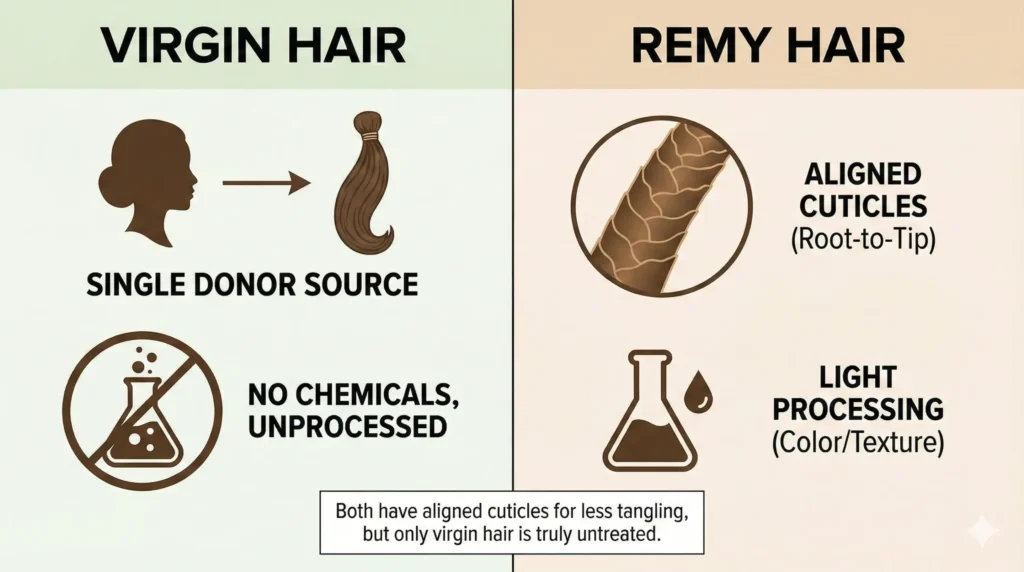
Virgin hair is 100% human hair that has never been chemically processed, colored, bleached, permed, or relaxed in any way. It comes directly from a donor in its completely natural state, with all cuticles intact and aligned in the same direction from root to tip. Because virgin hair has not been altered, it retains its natural texture, color, strength, and shine, making it the highest quality human hair available on the market.
Virgin hair is typically sourced from a single donor, which ensures consistency in texture, color, and quality throughout the entire bundle or set. The natural color of virgin hair is never jet black but rather a natural black, dark brown, or medium brown, and you may even find a few gray strands mixed in, which confirms its authenticity. The hair feels incredibly soft, silky, and smooth to the touch, moves naturally, and reflects light beautifully because the cuticles remain undamaged.
Because virgin hair has not been weakened by chemicals or heat treatments, it is stronger, more durable, and less prone to breakage, shedding, or tangling than processed hair. This makes virgin hair a long-term investment that can last for several years with proper care and maintenance.
This guide explains everything you need to know about virgin hair versus remy hair: what each type is, how they are processed and collected, how long they last, which offers more styling freedom, and how to choose the right option for your needs.
What is Remy Hair?
Remy hair is human hair that has intact cuticles aligned in the same direction, which prevents tangling and creates a smooth, natural appearance. The key characteristic of remy hair is that the cuticles have not been stripped or removed, and all the hair strands flow in one direction from root to tip, just like hair growing from a natural scalp. This cuticle alignment is what gives remy hair its signature softness, shine, and tangle-free quality.
Unlike virgin hair, remy hair may have undergone some level of chemical processing, such as dyeing, texturizing, or color treatment, to achieve specific shades or curl patterns. That body wave, deep wave, or colored remy hair you see in stores has been chemically treated to create those textures and colors. While this processing allows for more color and texture variety, it also means the hair has been altered from its natural state, which can affect its longevity and strength compared to virgin hair.
Remy hair can come from multiple donors, as long as the cuticles remain intact and aligned properly during collection and processing. With proper care, remy hair typically lasts between six months to a year, depending on how often it is worn and styled. While it may not last as long as virgin hair, remy hair still offers excellent quality, smooth texture, and natural movement at a more affordable price point.
Virgin hair is typically sourced from a single donor, which ensures consistency in texture, color, and quality throughout the entire bundle or set. The natural color of virgin hair is never jet black but rather a natural black, dark brown, or medium brown, and you may even find a few gray strands mixed in, which confirms its authenticity. The hair feels incredibly soft, silky, and smooth to the touch, moves naturally, and reflects light beautifully because the cuticles remain undamaged.
Because virgin hair has not been weakened by chemicals or heat treatments, it is stronger, more durable, and less prone to breakage, shedding, or tangling than processed hair. This makes virgin hair a long-term investment that can last for several years with proper care and maintenance.
This guide explains everything you need to know about virgin hair versus remy hair: what each type is, how they are processed and collected, how long they last, which offers more styling freedom, and how to choose the right option for your needs.
Processing and Collection Methods
The main difference between virgin hair and remy hair lies in how they are processed and collected. Virgin hair is completely unprocessed and comes directly from a donor who has not chemically treated their hair. After collection, virgin hair is simply washed, sanitized, and wefted without any additional chemical treatments, color alterations, or texture modifications. This preserves the hair’s natural integrity, strength, and cuticle structure, resulting in the healthiest, most natural-looking hair possible.
Remy hair, while maintaining intact and aligned cuticles, may go through light to moderate processing to achieve different colors, textures, or finishes. The hair is collected carefully to ensure all cuticles face the same direction, which is essential for preventing tangling and maintaining smoothness. However, manufacturers may apply chemical treatments such as dyes, texturizers, or relaxers to create the wide variety of colors and curl patterns available in remy hair products. These treatments can weaken the hair slightly, reducing its overall lifespan and styling versatility compared to virgin hair.
Both virgin and remy hair prioritize cuticle alignment, which is what sets them apart from non-remy or lower-quality human hair. When cuticles are aligned in the same direction, the hair strands slide smoothly against each other, reducing friction, tangling, and frizz. This is why both virgin and remy hair feel softer and look shinier than non-remy hair, which often has cuticles facing multiple directions or stripped entirely.
Cuticle Integrity and Alignment
Both virgin hair and remy hair have intact cuticles aligned in one direction, but the difference lies in whether those cuticles have been altered. Virgin hair cuticles remain completely natural and untouched, preserving their original structure and protective qualities. This means the hair maintains its natural moisture balance, shine, and strength, and it responds to styling and treatments just like your own natural hair would.
Remy hair also has intact cuticles aligned in the same direction, but the cuticles may have been exposed to chemical treatments during color or texture processing. While the cuticles are not stripped or removed like they are in non-remy hair, they may be slightly weakened or damaged by the processing, which can affect how long the hair stays soft, shiny, and tangle-free. That said, remy hair still maintains much better cuticle integrity than non-remy hair, which makes it a high-quality option for anyone looking for smooth, manageable extensions or bundles.
The intact cuticle structure in both virgin and remy hair is what gives them their natural movement, shine, and durability. When cuticles are intact and aligned properly, light reflects off the hair evenly, creating a natural sheen without looking artificially shiny or coated. The hair also experiences minimal shedding, tangling, and frizzing, which makes it easier to maintain and style over time.
Longevity and Durability
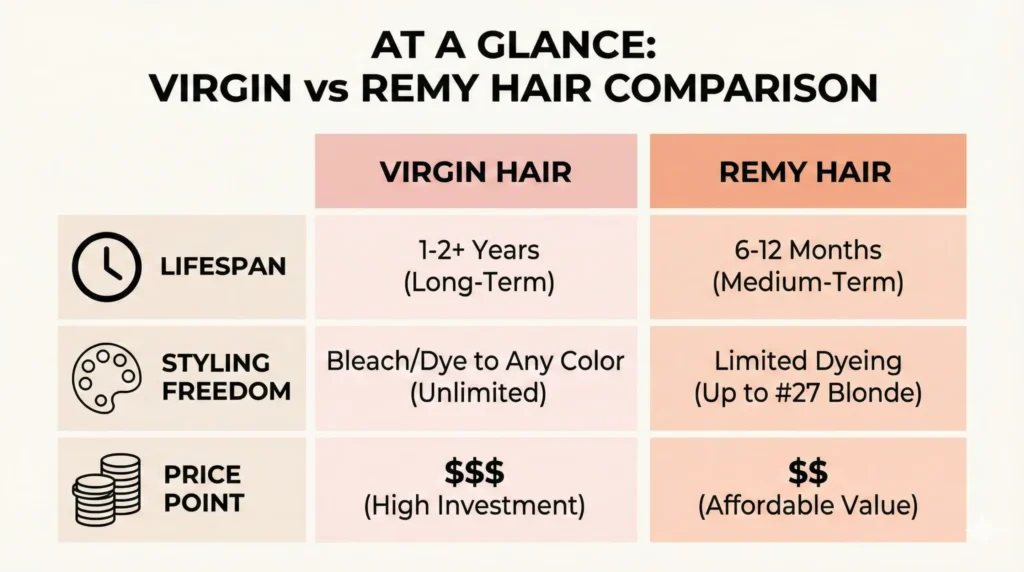
Virgin hair lasts significantly longer than remy hair because it has not been chemically processed or weakened. With proper care, virgin hair can last anywhere from one year to several years, making it a worthwhile investment for anyone who wants long-term, high-quality extensions or bundles. Because the hair is in its natural, undamaged state, it can withstand repeated washing, heat styling, and even additional color treatments without losing its softness, shine, or structural integrity.
Remy hair typically lasts between six months to a year, depending on how often it is worn and how well it is maintained. The chemical processing used to create different textures and colors can shorten the hair’s lifespan by weakening the strands and making them more prone to dryness, breakage, and tangling over time. However, with gentle care, sulfate-free products, and minimal heat styling, remy hair can still provide excellent performance and natural-looking results for many months.
Both virgin and remy hair are significantly more durable than non-remy or heavily processed human hair, which often only lasts a few months before becoming matted, tangled, or dry. The intact cuticles and proper alignment in both hair types help them resist damage and maintain their quality much longer than lower-grade options.
Styling Versatility and Freedom
Virgin hair offers the most styling freedom because it has never been chemically treated. You can dye it any color, bleach it to platinum blonde, straighten it, curl it, perm it, or relax it just like your own natural hair, and it will respond predictably without becoming overly damaged or brittle. This makes virgin hair ideal for anyone who loves experimenting with different colors and styles or who wants the flexibility to customize their hair to match their natural texture or desired look.
Remy hair offers good styling versatility, but with some limitations. Because it may have already been chemically processed to achieve its color or texture, additional treatments like bleaching or perming can cause damage or breakage. Most experts recommend that remy hair can be colored or bleached up to a medium blonde (level 27), but going lighter than that often results in dry, damaged hair that loses its softness and shine. Heat styling with curling irons and flat irons is generally safe for remy hair, as long as you use heat protectant and moderate temperatures.
If you want maximum flexibility to change your hair color and style as often as you like, virgin hair is the better choice. If you are happy with the color and texture you purchase and just want to heat-style occasionally, remy hair provides excellent performance at a more accessible price point.
Appearance and Texture
Virgin hair has a natural, authentic appearance that looks and feels like hair growing directly from your scalp. The natural color variation, slight texture differences from root to tip, and realistic movement make virgin hair blend seamlessly with your own natural hair. The shine is subtle and healthy-looking rather than artificially glossy, and the hair moves with natural body and bounce. Because virgin hair is sourced from a single donor, the texture remains consistent throughout the bundle, making blending and styling easier.
Remy hair has a smooth, polished appearance with a beautiful shine and soft texture. The chemical processing used to create different colors and textures gives remy hair a more uniform, perfected look that many people find appealing. However, because the hair has been treated, it may look slightly more processed than virgin hair, especially if it has been dyed jet black or given a glossy silicone coating. That said, high-quality remy hair still looks natural and realistic, especially when properly blended and styled.
Both virgin and remy hair feel soft and silky to the touch, but virgin hair tends to have a slightly more natural texture that mimics unprocessed, healthy hair. Remy hair may feel slightly smoother or silkier because of the light processing, which some people prefer, while others prefer the more organic feel of virgin hair.
Price Comparison
Virgin hair is the most expensive option on the market because of its rarity, quality, and unprocessed state. Sourcing virgin hair requires finding donors who have never chemically treated their hair, and the hair must be collected and handled carefully to preserve its natural integrity. Because of these factors, virgin hair bundles, closures, and frontals can cost significantly more than remy hair, sometimes 30 to 50 percent higher depending on the brand and hair origin. However, the investment often pays off in the long run because virgin hair lasts much longer and offers more styling versatility.
Remy hair is more affordable than virgin hair while still offering high quality and natural appearance. Because remy hair can come from multiple donors and may be chemically processed to create different textures and colors, the production process is less restrictive and more cost-effective. This makes remy hair accessible to a wider range of budgets, and for many people, the quality and lifespan of remy hair justify the price without needing to invest in virgin hair.
When considering price, it is important to think about cost per wear and longevity. While virgin hair costs more upfront, it lasts longer and requires less frequent replacement, which can make it more economical over time. Remy hair offers excellent value for the price, especially if you plan to change your hairstyle regularly or do not need the hair to last more than a year.
How to Identify Virgin Hair vs Remy Hair
Identifying authentic virgin hair requires looking for specific qualities. Virgin hair will have a natural color that is never jet black, typically appearing as natural black, dark brown, or medium brown with slight color variation throughout. You may even notice a few gray strands, which is a sign of authenticity. The hair should feel incredibly soft, smooth, and silky, with no chemical smell or synthetic coating. The ends should look healthy and full, not frayed or thin, and the hair should have a natural shine without looking overly glossy or artificially shiny.
Remy hair can be identified by its smooth, polished appearance and uniform texture. It will feel soft and tangle-free, with all the hair moving in one direction. Remy hair is often available in a wide range of colors, including jet black and dyed shades, which is a sign that it has been chemically processed. When you wash remy hair, it should not feel slimy or overly slippery, which would indicate a silicone coating. High-quality remy hair will feel soft but slightly less natural than virgin hair, with a more perfected, uniform texture.
A simple burn test can also help identify virgin hair versus heavily processed hair. When a small strand of virgin hair is burned, it smells like burning protein or feathers and turns to ash. Synthetic or heavily coated hair will smell like burning plastic and melt. This test should be done carefully and only on a small sample strand, but it can help confirm the authenticity of human hair.
Remy hair is more affordable than virgin hair while still offering high quality and natural appearance. Because remy hair can come from multiple donors and may be chemically processed to create different textures and colors, the production process is less restrictive and more cost-effective. This makes remy hair accessible to a wider range of budgets, and for many people, the quality and lifespan of remy hair justify the price without needing to invest in virgin hair.
When considering price, it is important to think about cost per wear and longevity. While virgin hair costs more upfront, it lasts longer and requires less frequent replacement, which can make it more economical over time. Remy hair offers excellent value for the price, especially if you plan to change your hairstyle regularly or do not need the hair to last more than a year.
Care and Maintenance Differences
Both virgin and remy hair require gentle care to maintain their quality, but virgin hair is generally more resilient. Virgin hair can be washed with sulfate-free shampoo and moisturizing conditioner every 7 to 10 wears, depending on product buildup. Because the cuticles are intact and undamaged, virgin hair retains moisture well and does not dry out as quickly as processed hair. You can use deep conditioning treatments, hair masks, and natural oils to keep virgin hair soft and hydrated without worrying about over-conditioning or weighing the hair down.
Remy hair also benefits from sulfate-free shampoo and regular conditioning, but it may require more frequent moisture treatments to combat dryness caused by chemical processing. Using leave-in conditioners, hydrating sprays, and lightweight oils can help keep remy hair soft and manageable. Avoid heavy silicone-based products, which can build up on the hair and make it look greasy or weighed down over time.
Both hair types should be detangled gently with a wide-tooth comb or loop brush, starting from the ends and working your way up to the roots. Heat styling should always be done with a heat protectant spray, and using the lowest effective temperature will help preserve the hair’s integrity. Air-drying is preferable to blow-drying when possible, and storing the hair properly on a hanger or in a silk bag will prevent tangling and maintain its shape between wears.
Which is Better for Your Needs?
Choosing between virgin hair and remy hair depends on your priorities, budget, and how you plan to use the hair. If you want the highest quality, longest-lasting hair with maximum styling freedom, virgin hair is the best choice. It offers unmatched versatility for coloring, heat styling, and chemical treatments, and it maintains its softness, shine, and natural movement for years with proper care. Virgin hair is ideal for anyone making a long-term investment in their hair or who wants the most natural, authentic-looking results possible.
If you are looking for high-quality hair at a more accessible price point and do not need extreme styling versatility, remy hair is an excellent option. It offers smooth, tangle-free texture, beautiful shine, and natural movement, and it lasts six months to a year with proper maintenance. Remy hair is perfect for anyone who wants to try different textures and colors without committing to the higher cost of virgin hair, or for anyone who plans to change their hairstyle regularly and does not need the hair to last multiple years.
Both options are significantly better than non-remy or heavily processed human hair, which often only lasts a few months before becoming dry, tangled, or damaged. Understanding the differences between virgin and remy hair helps you make a confident, informed decision that aligns with your styling goals, maintenance preferences, and budget, ensuring you get the best possible results from your hair extensions, bundles, or closures.
Remy hair also benefits from sulfate-free shampoo and regular conditioning, but it may require more frequent moisture treatments to combat dryness caused by chemical processing. Using leave-in conditioners, hydrating sprays, and lightweight oils can help keep remy hair soft and manageable. Avoid heavy silicone-based products, which can build up on the hair and make it look greasy or weighed down over time.
Both hair types should be detangled gently with a wide-tooth comb or loop brush, starting from the ends and working your way up to the roots. Heat styling should always be done with a heat protectant spray, and using the lowest effective temperature will help preserve the hair’s integrity. Air-drying is preferable to blow-drying when possible, and storing the hair properly on a hanger or in a silk bag will prevent tangling and maintain its shape between wears.